Task Organisation Methods for Growing Teams
Learn how task organization methods like GTD and Pomodoro scale—and why growing teams need flexible, cost-efficient systems instead of per-seat SaaS tools.

Most conversations about task organisation focus on individual productivity. Get Things Done. Pomodoro. The Ivy Lee Method. These frameworks are genuinely useful for solo work, and there's plenty of content celebrating them. But somewhere between a founder juggling priorities and a 50-person team, these methods run into friction.
The problem isn't that these methods are flawed. It's that they were designed for individuals, not systems. When you're building a team or managing workflows that span multiple people, departments, or clients, you hit constraints that personal productivity tools can't solve. You need task organisation methods that actually account for collaboration, visibility, cost, and flexibility as you scale.
Task organisation methods and their limits
Let's start with what works for individuals. The Ivy Lee Method teaches you to write six priorities each day, ranked by importance. It forces focus and ruthless prioritisation. Getting Things Done creates a trusted system to capture everything and free up mental bandwidth. Time blocking allocates calendar slots to specific work. Eat the Frog tackles your hardest task first. These methods reduce overwhelm and build discipline.
The moment you introduce a second person, though, these systems need translation. How does a team of five use the Ivy Lee Method if each person writes their own list independently? What happens when one person's priority blocks someone else's work? How do you see the whole picture when everyone is managing their own captured tasks?
This is where most teams reach for a tool. Trello, Asana, Monday, Notion. Each one promises to make collaboration easier. But here's the practical reality: these tools layer complexity on top of the methods. You're not using GTD anymore. You're using "GTD adapted to Asana," which means compromises. You lose flexibility. You trade customisation for per-seat pricing that accelerates as headcount grows. You lock yourself into someone else's workflow structure.

=>>> Read More: How to Prioritise Tasks Effectively - Workflow Systems Guide
The real cost of scaling task management
Most teams don't think critically about task organisation costs until they've already scaled past the free tier. A team of ten people using a tool priced at £10 per seat feels manageable. At fifty people, you're paying £500 monthly just to track tasks. At 200 people, that's £2,000 monthly. And you still can't customise the workflow because the tool is closed-source.
The other trade-off is equally painful: flexibility. Chimedeck and other open-source alternatives exist partly because closed SaaS tools force you into their opinion of how work should flow. You have four columns. You have three fields per card. Your workflows must fit these constraints, or you pay for "enterprise" customisation that's often just a conversation with sales about what's technically possible.
Growing teams face a choice that should not exist: pay per seat and constrain workflows, or build internal systems from scratch. The first option bleeds money. The second bleeds engineering time.
Task organisation at scale requires a different approach
What changes when you move from individual to team task organisation is the need for visibility, coordination, and adaptation. You need to see how one person's work connects to another's. You need bottleneck visibility. You need to run different workflows for different projects without rebuilding your system each time.
This is where traditional task organisation methods—even the good ones—need scaffolding. The Ivy Lee Method still works for your daily personal priorities, but you need a layer above it that shows how your six tasks connect to the team's twelve, which connect to the company's roadmap. Time blocking still matters, but you need to see when someone is time-blocked in a way that blocks a dependency. GTD still reduces overwhelm, but you need capture points across your whole operation: email, Slack, meetings, tools.
The system that works for a growing team is usually hybrid. It borrows from multiple methods. It scales because it's custom-built for your context, not someone's generalised vision of task management. And it avoids cost explosion because it's not tied to headcount.

=>>> Related Post: Best Task Management Tools: A Guide for Scaling Teams
Why open-source task management changes the equation
Open-source task management tools exist for one reason: organisations outgrow what closed systems offer, and building internal tools shouldn't require a dedicated engineering team.
When you choose an open-source solution, you gain something valuable that no per-seat SaaS tool offers: control. You can adapt the workflow structure to your actual processes instead of adapting your processes to someone's UI design. You can build custom fields for the metadata that matters to your business. You can integrate with your internal tools without begging for API access or paying for official integrations.
Cost becomes predictable. It's based on infrastructure, not headcount. Add five people or fifty people. The cost doesn't move. This is why open source Trello alternatives appeal to scaling teams: they solve the math problem that makes SaaS task management unsustainable.
Building workflows that grow with your team
The best task organisation methods for growing teams share a pattern: they're composable. You can mix the Ivy Lee Method's daily prioritisation discipline with GTD's capture philosophy, add time blocking for focus work, and layer visibility on top so the team understands dependencies. You can't do this in closed systems. You can in systems built for customisation.
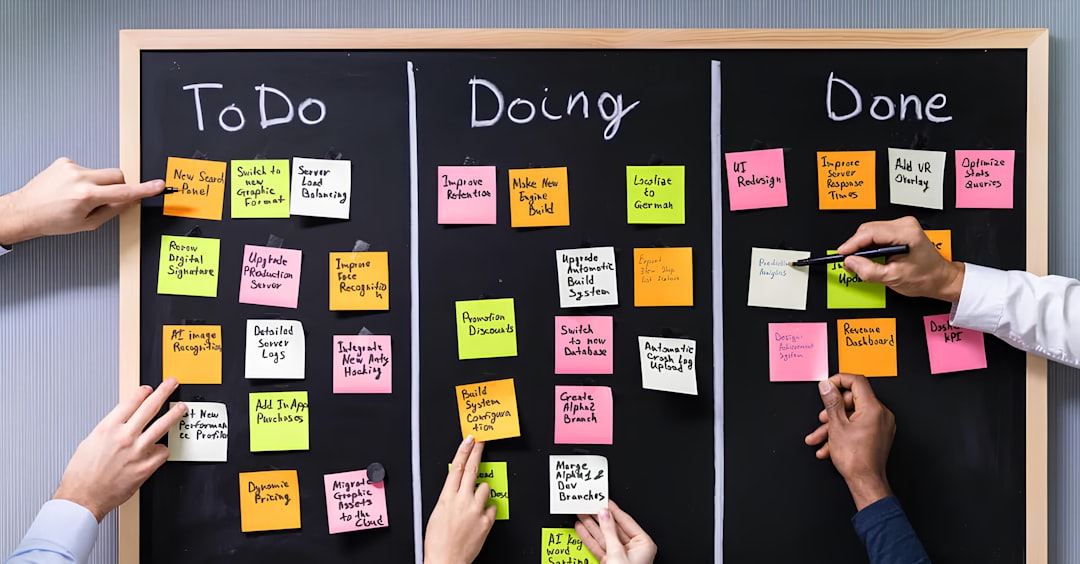
An alternative to Trello that prioritises flexibility lets you do something more powerful: evolve your task organisation method as the team evolves. When you're three people, you might use simple kanban columns: To Do, Doing, Done. When you're thirty, you layer priority scoring, SLA tracking, and dependency mapping on top without changing the core tool. The system grows with your needs instead of forcing you to migrate platforms or rebuild workflows.
This is the advantage of systems designed from the start to be flexible. They don't impose a single productivity religion. They let you choose which methods matter—and change that choice without tool switching.
Choosing infrastructure over opinion
The shift from individual to team task organisation isn't really about methods anymore. It's about infrastructure. You need systems that let you implement any method, layer multiple methods, and change methods as your team learns what works.
When evaluating task organisation tools, ask harder questions. Can you customise the workflow without paying for enterprise features? Can you add five new people without your costs multiplying? Can you integrate with the tools your team already uses? Can you own your data and workflows, or are you renting someone's opinion?
Most SaaS task management tools answer "no" to most of these questions. They're built on a model that works if you fit into their predefined structure. Growing teams and complex operations rarely do.
The path forward for scaling teams
Task organisation methods are tools for thinking. They're genuinely useful. But the infrastructure that hosts those methods—the system where your team actually captures, organises, and executes work—needs to be flexible enough to let you evolve. Most commercial tools aren't. They optimise for simplicity and per-seat revenue, not your ability to grow without friction.
This is why open-source workflow systems matter. They're built on a different assumption: that scaling teams need control, not constraints. That your task organisation should evolve with your business, not force your business into preset shapes. And that you shouldn't be penalised for growing. Systems without per-seat pricing, with unlimited users, and designed for customisation solve the real problem facing teams that are maturing beyond startup playbooks into actual operations.