Problems with Kanban: Scaling Beyond Visual Workflow Limits
Discover why kanban breaks at scale: per-seat pricing, tool limitations, workflow bottlenecks, and fragmentation. Learn how flexible platforms solve kanban's real constraints.
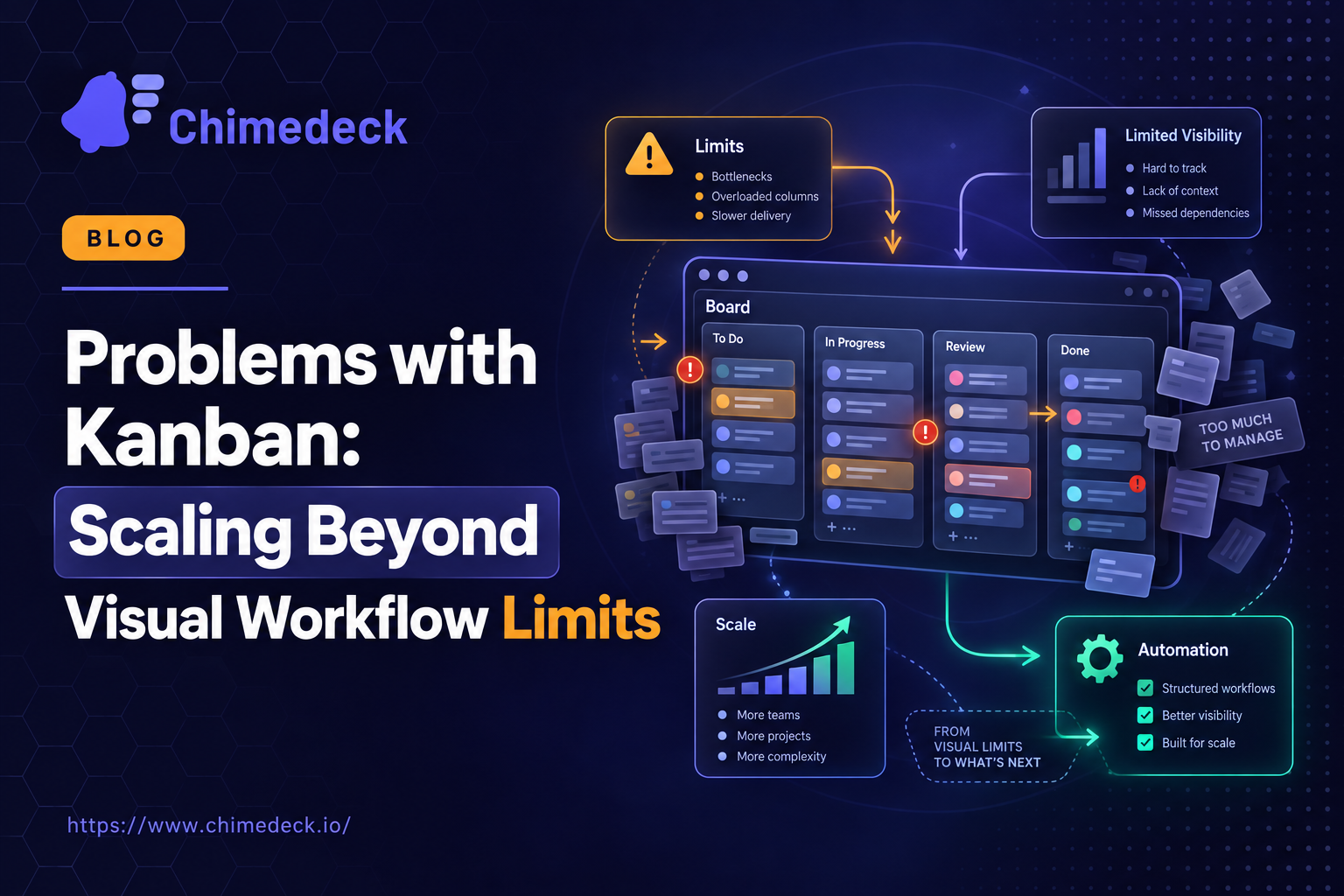
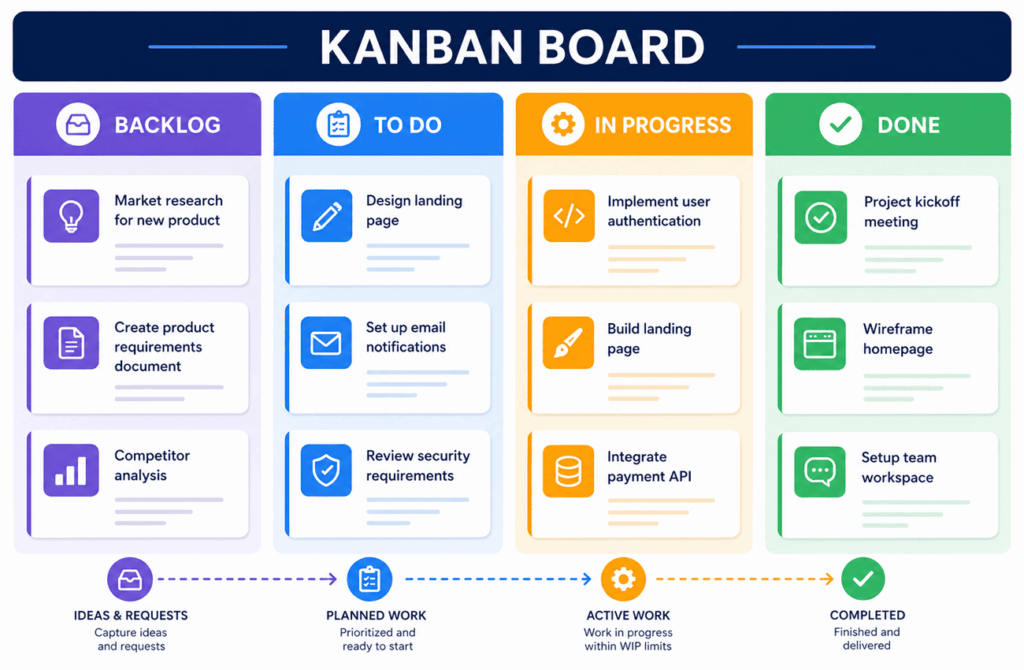
Kanban looks simple on the surface. A board with columns, cards that move left to right, work-in-progress limits. It's intuitive enough that most teams understand it within an hour. But as organisations scale, that simplicity reveals real limitations that no amount of workflow discipline can fix. The problem isn't kanban as a concept; it's how teams try to force it to solve problems it was never designed to handle.
Many teams hit frustration with kanban not because the methodology fails, but because the tools supporting it, and the operational boundaries around them, become the actual bottleneck. Understanding where kanban breaks helps you decide whether to double down, adjust, or move beyond it entirely.
Kanban works until it doesn't
Kanban excels at a specific problem: making visible work flow smoothly when you have a clear, linear process and a team small enough to coordinate through a shared board. A software team moving code through testing, review, and deployment. A marketing team managing campaign launches. A support queue handling incoming requests. In these scenarios, kanban delivers real value. It exposes bottlenecks, reduces rework, and gives everyone a shared view of priorities.
The issue emerges when organisations try to stretch kanban beyond this. Teams grow. Work becomes less linear. Multiple projects interlock. Dependencies span teams. Suddenly, the kanban board stops reflecting reality. Tasks sit in columns waiting for something external. The board accumulates cards that don't fit the workflow. Team members stop checking it because it's become stale or overwhelming. What worked for five people stops working for twenty.
This isn't kanban methodology failing. It's the tool hitting the limits of what a single visual workflow can manage. And at that point, teams face a choice: add layers of complexity to kanban (more columns, more boards, more manual coordination), or recognise that they need a different kind of system entirely.
The cost problem nobody talks about
Here's what rarely gets mentioned in kanban adoption discussions: most mainstream kanban tools charge per seat. Trello, Asana, Jira, Monday.com. They all use variations of the same pricing model. This creates an invisible ceiling that constrains how you can use kanban as your business grows.
With per-seat pricing, adding team members becomes expensive. Not just expensive: it becomes an increasingly expensive way to solve scaling problems. You hit a point where the cost of adding people to your kanban tool exceeds the value they're delivering to the board itself. So teams split into multiple boards, multiple tools, or stop adding stakeholders who should be involved.
This fractures your visibility. Your kanban board was supposed to create a unified view of work. But when cost prevents you from adding people, you lose that unity. Product managers can't see support tickets. Operations can't see product roadmap. Sales can't see what's in development. Each team maintains its own board, and coordination happens through meetings, email, and Slack messages around the tool rather than within it.
A kanban system designed for unlimited users removes this constraint entirely. Work stays visible to anyone who needs to see it, regardless of team size or headcount changes. This is a structural advantage that per-seat pricing can never match.
Tool limitations compound workflow problems
Most kanban tools ship with rigid column structures. You inherit whatever workflow the vendor designed. Some allow customisation, but deeper changes require developer access, API integrations, or custom development that the vendor may not support at all.
Real work doesn't fit into standard workflows. A software team might need different processes for bugs versus features. An agency managing multiple clients needs separate workflows per client. A manufacturing outfit needs to track dependencies, resource constraints, and physical constraints that a standard "To Do, In Progress, Done" board can't represent.
When the tool limits your workflow instead of enabling it, teams work around it. They add nested spreadsheets. They create shadow tracking systems. They use Slack bots to compensate for missing functionality. The kanban board becomes just one part of a fragmented system, and you've reintroduced the very problem kanban was supposed to solve: scattered, out-of-sync views of work.
A flexible, open-source alternative like Chimedeck lets you define workflows that match your actual process. Not the process the vendor thinks you should have. Your process. This moves the tool from a constraint to an enabler.
Bottlenecks that kanban boards can't solve
Kanban boards excel at surfacing bottlenecks within a single workflow. You see cards piling up in one column, and you know there's a problem. But many real bottlenecks sit outside the kanban board entirely.
A card is blocked waiting for design feedback, but design reviews happen asynchronously in a separate system. A task requires approval from someone in another department, and that approval process isn't captured on the board. A developer needs infrastructure setup before they can start coding, but the infrastructure team manages tickets in a different tool. Resource constraints aren't visible. External dependencies aren't tracked. The board shows local flow, but it can't show the systemic friction that slows everything down.
This is where single-tool kanban starts to feel inadequate. You need visibility across workflows, not just within one. You need to track how work moves between teams, not just within them. You need to see which external factors are actually blocking progress, not just count cards in columns.
The solution isn't a bigger kanban board. It's a system that integrates multiple workflow layers while keeping everything visible. When kanban can coordinate across teams and connect to the operational context around work, that's when it becomes genuinely powerful.
When fragmented tools become your real problem
Most organisations don't run on a single kanban tool. They run on kanban plus email, Slack, Google Docs, separate issue trackers, financial systems, HR systems, and whatever specialist tools their industry demands. The kanban board is one window into a much larger operation.
This fragmentation is the real overhead. Not the kanban methodology itself, but maintaining consistency across ten different tools. Data lives in multiple places. Decisions get made in channels where not everyone sees them. Information drifts out of sync. And because kanban sits inside this fragmented ecosystem, it can't do its core job: give people a clear, unified view of what matters.
Teams try to bridge the gap with custom integrations, automation tools, and manual synchronisation. But these approaches are brittle. They break when tools change. They require constant maintenance. They introduce lag between when work actually happens and when the kanban board reflects it.
The alternative is moving toward a system designed as a platform, not a point tool. Something that can serve as your primary operational workspace for workflow, task tracking, and coordination. Not replacing all your other tools, but reducing how much you depend on external systems for your core work management.
Building sustainable workflows at scale
The teams that stick with kanban successfully tend to have either very simple, linear workflows or the maturity to implement kanban properly across their entire organisation. They invest in discipline around WIP limits, they maintain rigorous definition of workflow states, and they actively work to prevent the board from becoming a dumping ground.
But this requires organisational buy-in that many teams never achieve. And for those with complex, multi-team workflows, even perfect kanban discipline hits a structural ceiling.
Better alternatives focus on flexibility. Systems that let you define workflows that actually match your work. Tools that don't penalise growth through per-seat pricing. Platforms that integrate multiple workflow layers instead of forcing everything into a single board view. These systems keep kanban's core strength, the visible workflow that exposes bottlenecks, but remove the constraints that make kanban break at scale.
For growing teams and organisations that outgrow simple task management, the choice isn't between kanban and chaos. It's between kanban constrained by tool limitations and a more flexible, integrated approach to workflow that adapts as your operation changes.
Chimedeck - MCP task management platform
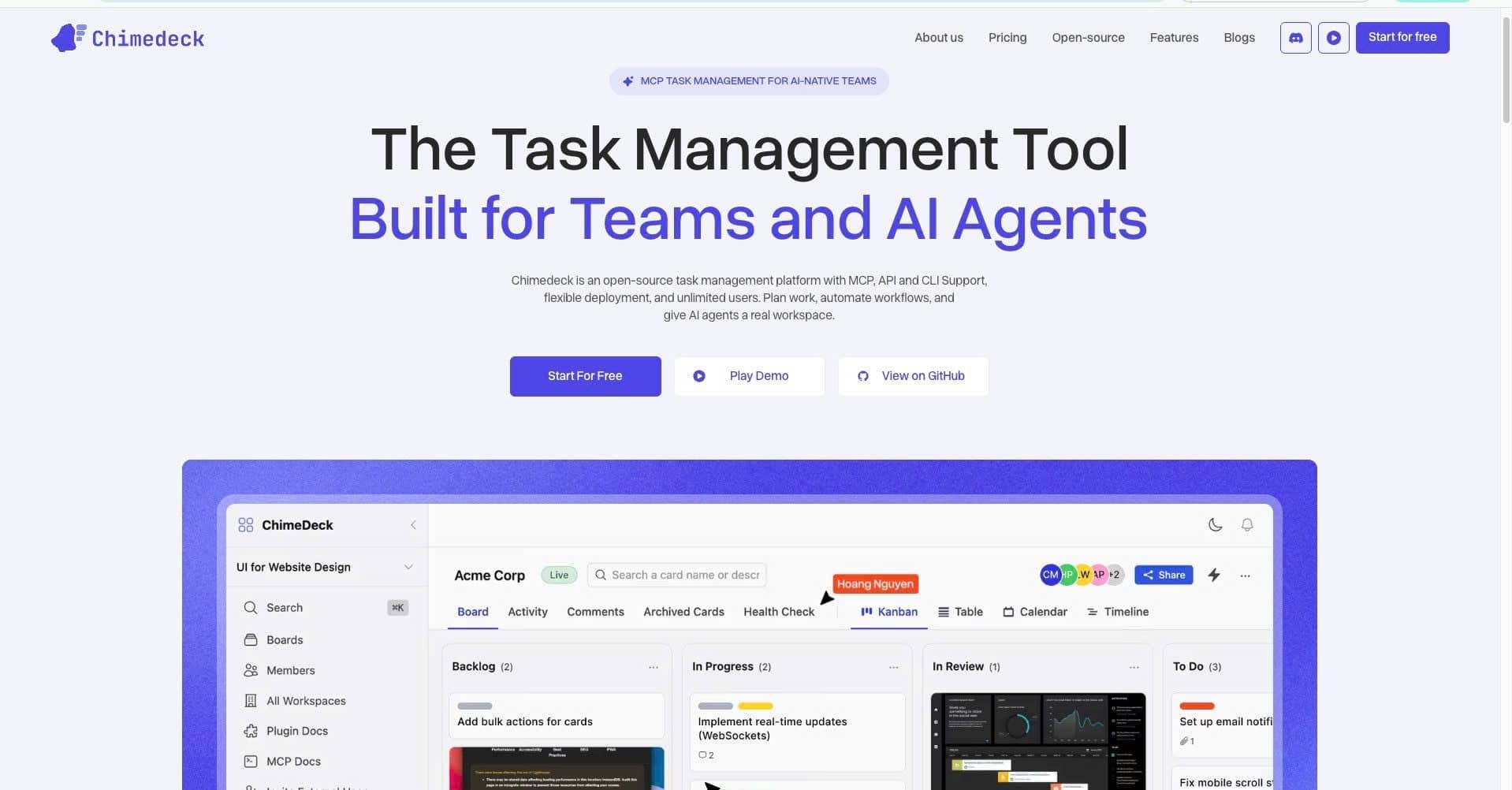
Chimedeck is an open-source workflow platform designed for teams that need more than kanban boards. It combines visual, kanban-style task management with flexible deployment, unlimited users, and AI-powered workflow automation. Unlike traditional project management tools with per-seat pricing limits, Chimedeck scales with your team without escalating costs. Built for operations teams, product organisations, and agencies, it solves the fragmentation problem by creating a unified workspace where work stays visible and coordination happens seamlessly across your entire operation.