Open Source Kanban Board: Self-Hosted Alternatives to Trello
Explore open source kanban boards as cost-effective self-hosted alternatives to Trello. Compare Wekan, Taiga, Kanboard, Planka & Focalboard with pros, cons, and pricing.

Managing projects and tasks across a growing team becomes increasingly expensive with traditional SaaS tools. Trello, Asana, and similar platforms charge per user, so when your team expands from five to fifty people, your monthly bill scales accordingly. At a certain point, the licensing costs become harder to justify than the actual problem you're trying to solve. An open source kanban board offers a fundamentally different approach: unlimited users, no per-seat fees, and complete control over your data and workflow customization.
For teams that have hit this ceiling, or for organisations that never wanted to rent their project management system in the first place, open-source kanban boards represent a pragmatic alternative. This article explores why teams choose them, what to evaluate when comparing options, and which solutions deliver the best balance of features, ease of use, and operational flexibility.
Why Teams Outgrow Trello and Similar Tools
Trello's simplicity is its main strength. Cards, lists, and boards reflect how many teams naturally think about workflow: visual, linear, easy to onboard. But that simplicity comes with structural limitations that become painful at scale.
The first constraint is cost. Most SaaS project management tools follow a per-seat model: pay per active user. For small teams, this is reasonable. But when you move from a startup to a department or company, the math breaks down. A team of 30 people on Trello's standard plan costs roughly 25 pounds per person per month. That's 7,500 pounds annually, before any premium add-ons or special integrations. Scale to 100 people and you're looking at 30,000 pounds a year for the same core functionality you could self-host for a fraction of that cost.
Beyond cost, feature limitations become apparent. Trello doesn't natively support burndown charts, swimlanes for parallel workflows, or advanced reporting. It lacks built-in time tracking, dependency mapping, or workflow automation beyond simple integrations. Many teams respond by bolting on additional tools: a separate reporting system, a time tracking app, a CI/CD integration platform. This fragments your workflow and creates overhead in data sync and context switching.
Finally, there's the lock-in problem. Your data lives on Trello's servers, in Trello's format, governed by Trello's terms of service. If you want to switch platforms, move to self-hosted infrastructure for compliance reasons, or deeply customize your workflow, you're locked out. The export options are limited, and rebuilding your system elsewhere takes months.

Open Source Kanban Boards Solve Real Scaling Problems
An open source kanban board shifts the power dynamic. Instead of paying per user, you pay for infrastructure. Instead of accepting whatever features Atlassian decides to ship, you can modify the code, add integrations, and shape the tool around your workflow.
The first advantage is cost predictability. Self-hosting a kanban board means your costs are tied to server capacity, not headcount. A small Kubernetes cluster or Docker deployment can handle hundreds of users for a fraction of SaaS licensing costs. Your monthly bill doesn't spike when you hire. This makes open-source solutions particularly attractive for agencies managing multiple clients, or large teams where per-seat pricing becomes prohibitive.
The second advantage is data ownership. Your project data stays on your infrastructure, under your control. This matters for regulated industries like healthcare or finance, where data residency and compliance are non-negotiable. It also matters for competitive teams that treat project information as sensitive. You don't need to trust a third party with your roadmap, customer insights, or internal processes.
The third advantage is customisation and integration. Open-source tools expose their APIs and source code. You can build custom fields to match your process, write integrations with your internal systems, or fork the project to add proprietary features. This flexibility is impossible with a closed SaaS tool.
Evaluating Open-Source Kanban Boards
Choosing the right open source kanban solution depends on a handful of practical factors.
Deployment ease matters more than it sounds. Some open-source projects have excellent documentation and Docker support; others require deep DevOps knowledge. If your team doesn't have dedicated infrastructure expertise, a tool that takes thirty minutes to deploy is fundamentally different from one that takes thirty days.
Feature completeness determines whether you actually replace your existing tools or add yet another layer. Do you need Scrum support, burndown charts, time tracking, custom fields, workflow automation, or API integrations? Not all open source kanban boards offer the same feature set. A minimalist board might be perfect for small teams; a larger organisation might need richer capabilities.
Community activity is a proxy for quality and stability. Active projects get bug fixes, security updates, and feature development. Abandoned projects accumulate technical debt and vulnerability. Check the GitHub commit history, issue response times, and whether the project has regular releases.
Migration capability matters if you're moving from Trello or another platform. Tools that support direct imports save weeks of manual work. Tools with good API documentation make custom migration scripts easier to build.
Top Open-Source Kanban Boards in 2025
Here's a practical comparison of the leading open source kanban solutions, with a focus on what each excels at.
| Tool | Best For | Ease of Deployment | Key Strength | Trade-off |
|---|---|---|---|---|
| Wekan | Trello users wanting a direct replacement | High (Docker native) | Familiar interface, real-time collaboration, multilingual | Heavier resource footprint |
| Taiga | Agile teams using Scrum or Kanban | Medium (good docs) | Sprint planning, burndown charts, rich reporting | Steeper learning curve than Trello |
| Kanboard | Teams with minimal infrastructure | Very High (runs on Raspberry Pi) | Lightweight, minimal dependencies, unlimited users built-in | Feature-sparse compared to others |
| Planka | Teams wanting modern design and real-time updates | High (React/Node stack) | Clean UI, fast performance, active development | Fewer integrations than mature projects |
| Focalboard | Teams using Mattermost or open source chat | Medium | Native Mattermost integration, multiple views (Kanban, calendar, table) | Smaller ecosystem than alternatives |
Wekan is the closest replacement for Trello users. It mimics Trello's interface closely, supports real-time collaboration, and runs easily in Docker. If you're migrating from Trello, Wekan gets teams up to speed fastest. The trade-off is that Wekan is heavier on resources than some alternatives, so it requires a bit more infrastructure investment.
Taiga is built for teams that want more than a kanban board. It includes sprint planning, burndown charts, custom fields, and integration with development tools. If your team uses Agile methodology and needs visibility into velocity and sprint health, Taiga delivers. The cost is a steeper onboarding curve than Trello.
Kanboard is the minimalist choice. Stripped to essentials, it runs on almost anything. It offers task filtering, subtasks, attachments, and comments. Kanboard's main appeal is simplicity and resource efficiency. It's ideal for IT teams or organisations that want a lightweight system they can run and maintain themselves without overhead.
Planka bridges modern design with minimalism. Built with React and Node, it offers a cleaner interface than older open source alternatives and prioritises real-time updates and performance. Planka suits teams that want current design patterns without abandoning open source principles.
Focalboard integrates natively with Mattermost, making it ideal for organisations already using open source communication platforms. It offers multiple views beyond kanban, including calendar and table views. If your team is invested in an open source communication stack, Focalboard fits naturally.

Cost and Deployment Advantages
The financial case for open source kanban boards strengthens as your team grows. Let's anchor this in reality.
A team of 50 people on Trello's standard plan costs 12,500 pounds annually. A self-hosted Wekan deployment on a modest cloud infrastructure (a small Kubernetes cluster or a few Docker containers) costs around 100 to 200 pounds monthly, or 1,200 to 2,400 pounds annually. Even accounting for one part-time person spending a few hours a month on maintenance, the infrastructure cost is a fraction of licensing.
The economics improve further if you're already running on-premise infrastructure or have spare cloud capacity. A self-hosted kanban board becomes almost free to operate once it's running.
Deployment flexibility is another advantage. You can run an open source kanban board on your own servers, a private cloud, a public cloud provider, or even a Raspberry Pi in a closet. You choose where your data lives. For organisations with compliance requirements around data residency, this control is essential. For competitive teams that don't want project information touching third-party servers, self-hosting removes that risk entirely.
Migration from SaaS to self-hosted is also smoother than it sounds. Tools like Wekan and Taiga support direct Trello imports. You can move your boards, lists, and cards in a matter of minutes. Custom metadata and automation rules might require manual setup, but the baseline migration is straightforward.

When Self-Hosted Kanban Boards Make Sense
Open source kanban boards aren't the right choice for every team, so it's worth being clear about when they win.
They make sense if you're managing more than 20 to 30 active users and the per-seat costs are material to your budget. They make sense if you need to customise workflows beyond what any SaaS tool allows. They make sense if regulatory or competitive concerns make third-party data hosting unacceptable. They make sense if you want to avoid vendor lock-in and maintain portability.
They're less compelling if you're a very small team, where SaaS simplicity matters more than cost. They require more operational overhead, so teams without infrastructure expertise may prefer the managed SaaS experience. And if you need cutting-edge features that only proprietary tools have developed (like AI-powered task prioritisation or advanced forecasting), open source alternatives may lag.
But for most growing organisations, the trade-off tips toward self-hosted. You trade some ease of use for control, cost efficiency, and customisation. For teams operating at scale, that's usually the right bet.
Beyond Kanban: Integrating with Modern Workflows
The strongest open source kanban boards increasingly integrate with broader workflow systems. Taiga connects to GitHub and Jira. Wekan exposes APIs for CI/CD integration. Focalboard embeds into Mattermost for chat-driven task management.
This integration matters because kanban boards rarely work in isolation. Your projects touch code repositories, deployment pipelines, communication platforms, and reporting systems. A kanban tool that acts as a hub, pulling data from and pushing to these systems, reduces context switching and keeps workflows coherent.
The frontier in open source project management is moving toward workflow infrastructure: systems that orchestrate tasks, automate routine work, and connect to your entire development and operational stack. Open source tools that support this vision through APIs, webhooks, and extensibility are better positioned for teams with complex operational needs.
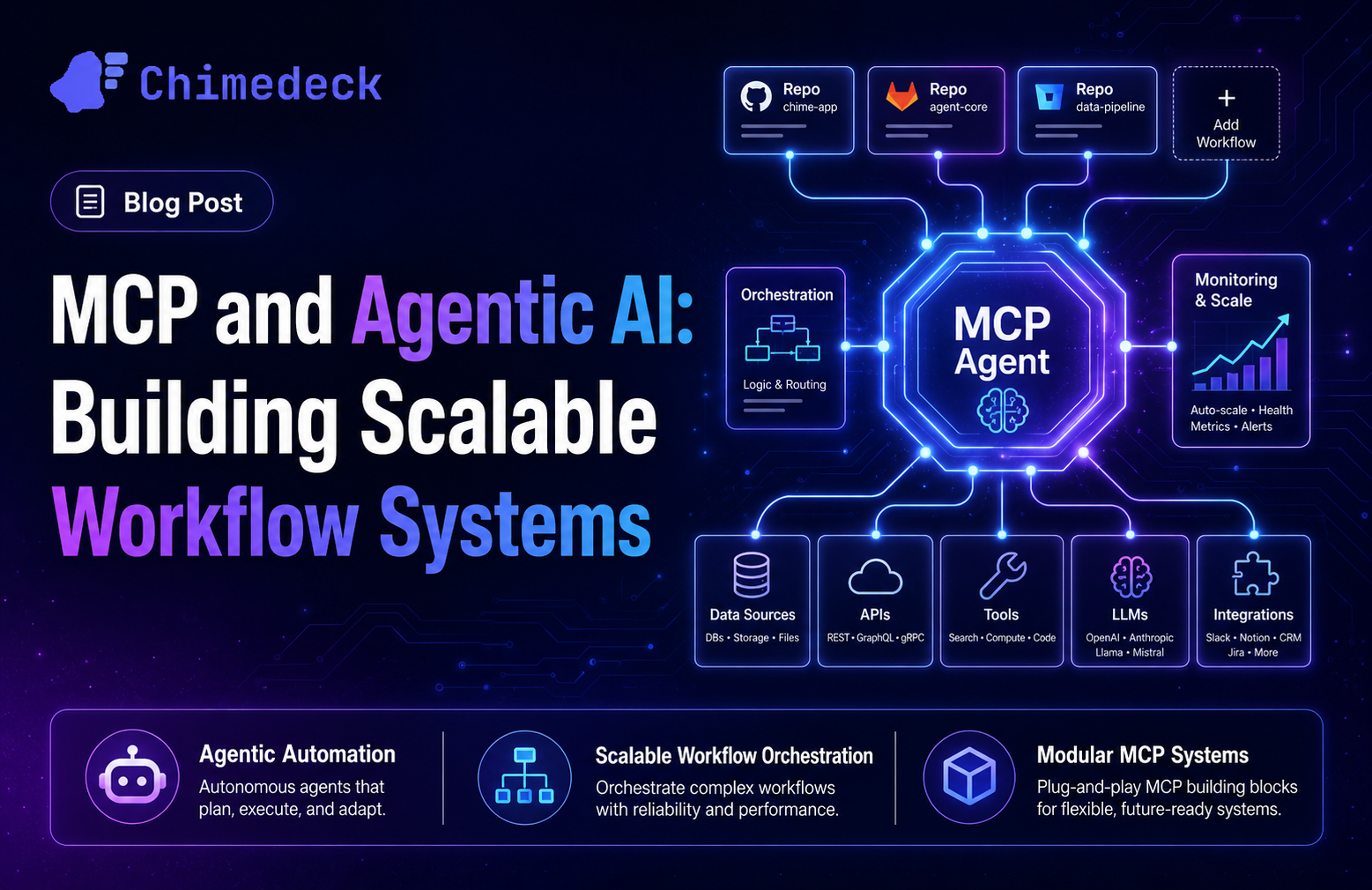
Chimedeck - MCP Task Management Platform
Chimedeck is an open-source workflow system designed for teams that need the simplicity of kanban-style task management combined with AI-powered automation and flexible deployment. As a self-hosted alternative to Trello, Chimedeck offers unlimited users without per-seat pricing, full customisation through open source code, and native support for workflow automation through integrations and MCP (Model Context Protocol) tasks. It's built for organisations seeking to scale project management without scaling licensing costs, and for teams that want intelligence embedded directly into task execution rather than bolted on as an afterthought.