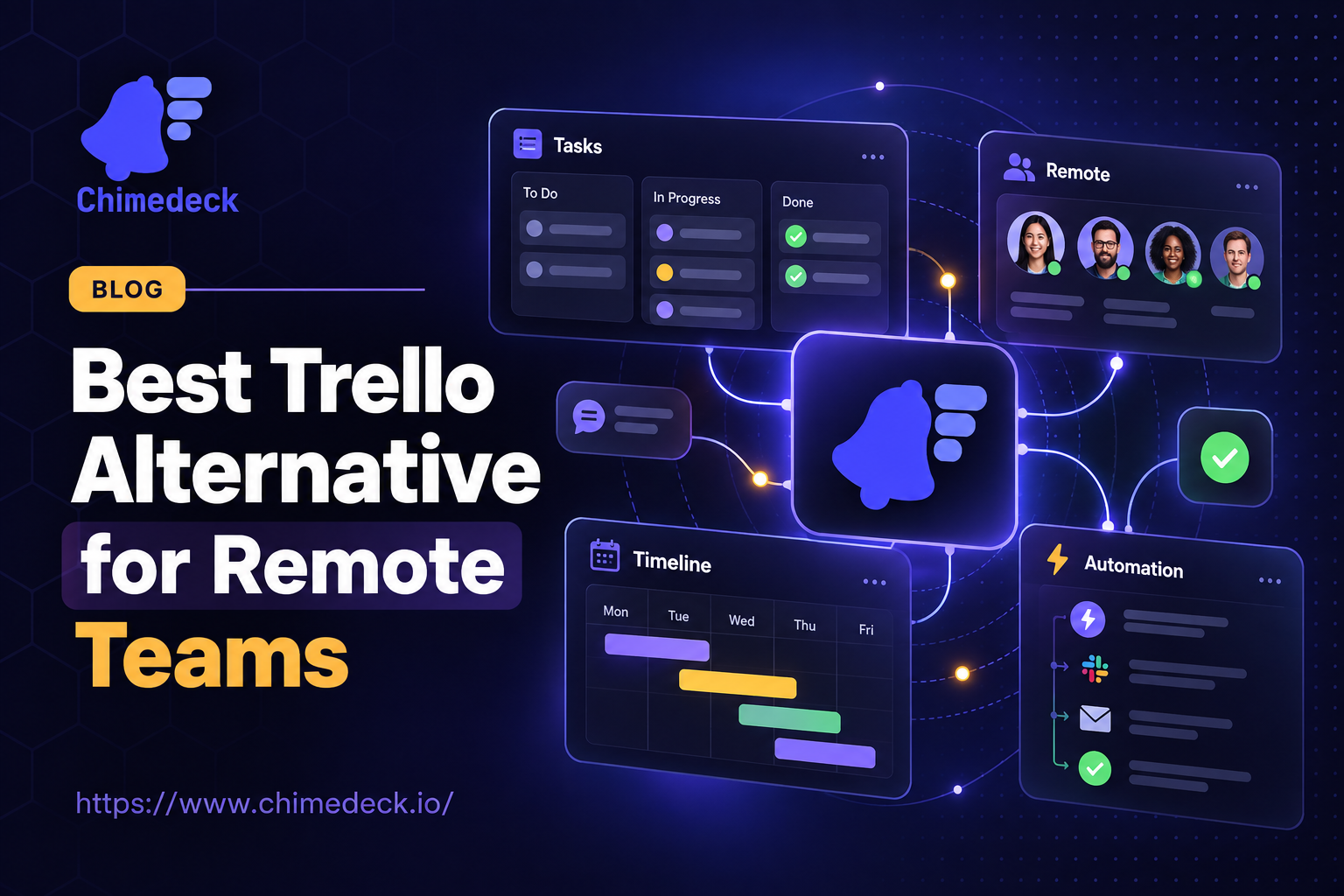
Agentic Workflow: Building Scalable Operations Without Per-Seat Pricing
Learn how agentic workflows enable teams to build adaptive, AI-driven operations that scale without per-seat pricing constraints. Explore cost advantages and implementation patterns.

Most teams running complex operations today rely on a patchwork of tools: project management systems for task tracking, automation platforms for workflow orchestration, and communication tools to keep everyone aligned. The reality is that each tool operates in isolation, and when conditions change, the entire workflow requires manual intervention to adapt. This is where agentic workflows change the game.
An agentic workflow is not just another layer of automation. It's a fundamental shift in how teams can structure their operations to handle complexity, adapt to real-time conditions, and scale without multiplying tool costs. Unlike traditional workflow systems that follow rigid rules, an agentic workflow enables autonomous decision-making across coordinated steps, allowing teams to build workflows that evolve as business needs change.
What's Actually New About Agentic Workflows
To understand why agentic workflows matter, it helps to compare them against what came before. Traditional automation tools like Robotic Process Automation (RPA) excel at repetitive, rule-based tasks. A chatbot following a decision tree can handle simple customer queries. A scheduler can trigger actions on a fixed timetable. These systems work well when the process is predictable and well-defined.
But most business operations aren't predictable. An IT support ticket might require troubleshooting steps that depend on what the user says. A content approval workflow might need different escalation paths depending on the content type and team capacity. A customer onboarding process might adapt based on what information the customer provides upfront.
This is where agentic workflows excel. Rather than following a predetermined path, an agentic workflow system uses AI reasoning to break down complex tasks, gather information dynamically, and adjust its approach based on real-time data and feedback. The workflow agent can call different tools, interpret results, and decide next steps without human intervention at each stage. If conditions change, the agent adapts instead of failing.
The distinction matters operationally. A static workflow system requires engineers or administrators to rewrite rules when business conditions shift. An agentic workflow can learn and adapt within constraints that the team sets, making it fundamentally more flexible for teams managing evolving operations.

Where Traditional Workflow Tools Create Bottlenecks
Most teams using traditional workflow and project management tools encounter similar friction points as they scale. The first is cost structure. Tools like Asana, Trello, and Monday.com charge per seat, which means every new team member multiplies costs. For agencies managing multiple client projects, or growing startups running cross-functional operations, this becomes a scaling barrier. A 50-person team switching from $15 per user to $25 per user feels like a tax on growth.
The second is inflexibility. When you're locked into a platform, customizing workflow logic often requires upgrading to pricier tiers, buying additional integrations, or hiring consultants to build connectors. Teams working in regulated industries or with unique operational needs often find themselves rebuilding logic they already have internally, just within the constraints of their chosen tool.
The third is fragmentation. Even sophisticated platforms can't do everything. Most teams end up integrating their project tool with a separate automation platform like Zapier, a communication system like Slack, and maybe a custom script layer. Each integration adds latency, creates debugging challenges, and introduces failure points. When one tool goes down, the entire workflow can break.
An open source trello alternative with agentic workflow capabilities addresses all three. By eliminating per-seat pricing, teams avoid the scaling tax. By remaining open-source and self-hosted, teams retain full control over customisation and deployment. By embedding AI-driven decision-making directly into the workflow layer, teams can build complex operations on a single platform instead of stitching together multiple tools.
How Agentic Workflows Actually Work in Practice
Consider a concrete example: a marketing agency managing multiple client campaigns. A traditional workflow might look like this: campaigns are created in a project tool, tasks are assigned manually, updates are posted to Slack, and when something requires approval, an admin manually checks the status and sends a message.
With an agentic workflow, the system itself can coordinate these steps. When a new campaign is created, the workflow agent reads the campaign brief, understands the timeline and deliverables, and automatically generates task cards with realistic timelines based on historical data from similar campaigns. As tasks progress, the agent monitors status and surfaces bottlenecks without being explicitly prompted. When a deliverable is ready for review, the agent routes it to the right approver based on rules the team defined, and if feedback comes back, the agent adjusts dependent tasks and timelines accordingly.
The agent uses tools to do this: API calls to pull campaign data, integrations with communication systems to notify teams, access to historical project data to inform estimates, and feedback mechanisms to learn from approval patterns. The workflow adapts because the agent reasons about what's happening in real time, not because someone wrote a script to handle every possible case.
What makes this practical for teams is that the agent operates within clear boundaries. The team defines what tools the agent can use, what actions it can take, and what decisions require human input. For instance, the workflow agent might auto-assign routine tasks but escalate anything flagged as high-priority to a human. This balance between automation and control is critical for operational confidence.
Core Elements That Make Agentic Workflows Work
Building an agentic workflow system requires several components working together. The first is a reasoning engine, typically a large language model, that can break down complex tasks and plan execution steps. The second is access to tools: APIs, databases, integrations, and connectors that let the agent interact with your existing systems. Third is a feedback mechanism so that human decisions and outcomes inform how the agent behaves in future iterations.
Fourth is coordination. In complex operations, multiple agents often need to work together. One agent might handle customer data validation, another manages team assignment, and a third handles notification and escalation. These agents need to communicate, share context, and coordinate handoffs without creating bottlenecks.
Fifth is observability. Teams need to understand what the agent is doing, why it made certain decisions, and where it encountered problems. This is especially important in regulated environments or when the workflow handles sensitive data. A black-box automation system that nobody can debug becomes a liability.
Finally, the system needs to be adaptable without constant rebuilding. Rather than writing code every time business logic changes, teams should be able to update prompts, adjust tool definitions, or reconfigure decision boundaries. This is where open-source platforms with modular architecture win over locked SaaS tools.

Cost and Scaling Realities
One of the biggest advantages of agentic workflows is operational economics. If you're using a platform like Chimedeck with no per-seat pricing, adding team members doesn't increase tool costs. This changes the math for scaling operations. A 10-person team and a 100-person team both pay the same for infrastructure, which means the cost per person of coordination and workflow management actually decreases as you grow.
For agencies and service companies, this is transformative. Instead of choosing between hiring more staff or reducing per-employee tool budgets, you can scale both. Teams can also build integrations that would be cost-prohibitive on proprietary platforms. An internal script layer that connects your task management tool to your billing system, your time tracker, and your client portal costs almost nothing to maintain when you control the platform.
The trade-off is that self-hosted platforms require some operational overhead. You need to manage deployment, updates, and infrastructure. But for teams large enough to have engineering capacity or outsource DevOps, this cost is usually lower than the recurring SaaS cost over multiple years. And you retain full control over data, deployment region, and customization.
Avoiding Workflow Fragmentation
Most teams don't start with fragmented workflows by choice. It happens gradually. The project tool doesn't handle approvals well, so you add an approval workflow tool. That tool doesn't integrate with Slack, so you add a connector. The connector times out sometimes, so you add monitoring. The monitoring needs a dashboard, so you build one. Within a year, you're managing a stack of seven different systems.
An agentic workflow platform that's both powerful and unified lets teams avoid this creep. If your core platform handles task management, coordination, automation, and integration natively, you don't need to bolt on separate systems. This reduces failure points, cuts operational complexity, and makes the system cheaper to maintain.
The key is that the platform needs to be extensible. It can't do everything out of the box, but it should make it easy to add capabilities without leaving the ecosystem. APIs, webhooks, custom tool definitions, and prompt-based customisation are the mechanisms that prevent lock-in while keeping the system unified.
Moving from Experimentation to Production
Many organisations approach agentic workflows as an experiment. They try a simple automation, see it works, then try to scale it. The jump from a proof of concept to production-grade agentic workflows requires thinking about governance, reliability, and cost control upfront.
Governance means defining who can create workflows, what data they can access, and what decisions require human review. For regulated industries, this is non-negotiable. For most organisations, it's about building guardrails that let teams move fast while maintaining trust.
Reliability means monitoring what the agent is doing, understanding failure modes, and having rollback plans. If an agent makes a bad decision, you need to be able to see it quickly and fix it. This requires logging, alerting, and dashboards that most SaaS workflow tools don't provide but self-hosted open-source platforms can support with custom extensions.
Cost control means understanding what's expensive. If your agentic workflow calls an external API hundreds of times per operation, and you're processing thousands of operations, costs can balloon. Open-source platforms let you instrument this and optimise it. You can cache API responses, batch operations, or switch providers without changing your platform.
Building Scalable Operations Without the SaaS Tax
The core insight behind agentic workflows is that as your operations get more complex, you need systems that can adapt faster than your team can manually adjust them. Static rule-based automation breaks when business conditions change. Per-seat SaaS pricing penalises growth. Fragmented tool stacks create endless integration work.
An open source alternative to traditional tools with built-in agentic workflow capabilities changes this equation. You get the adaptability of AI-driven reasoning applied to your workflows, the cost efficiency of unlimited users, and the control of open-source infrastructure. As your team grows and your workflows become more sophisticated, the same platform scales with you without multiplying costs or creating new technical debt.
The operational shift from manually managing complex workflows to building adaptive, agent-driven systems isn't just a technology choice. It's a change in how teams think about scaling operations. Instead of building workflows that are rigid but predictable, you build systems that are both adaptive and controllable. For teams managing complex, evolving operations, that shift is where real efficiency gains come from.
Chimedeck - MCP Task Management Platform
Chimedeck is an open-source task management platform designed for teams that need scalable workflow automation without per-seat pricing constraints. Built with AI-powered workflow capabilities at its core, Chimedeck enables teams to implement agentic workflows across complex operations—from multi-agent task coordination to adaptive process automation. As an open-source alternative, it offers unlimited users, flexible deployment, and full customisation control, making it ideal for agencies, growing startups, and organisations requiring self-hosted infrastructure. By combining project management with agentic workflow capabilities, Chimedeck helps teams automate operational complexity while maintaining governance and control over their systems.