How to Plan Tasks Efficiently: Scale Your Team System
Learn how to plan tasks at scale. Move beyond simple productivity methods to build infrastructure that grows with your team without per-seat pricing constraints.

Most teams start with good intentions around task planning. You set priorities, create to-do lists, maybe use a simple framework like the 1-3-5 rule or time blocking. But somewhere between five people and fifty, something shifts. The planning system that worked brilliantly for a small team suddenly feels fragmented. Tasks live in Trello but context lives in Slack. Priorities shift but nobody knows until the meeting. Bottlenecks appear because there's no visibility into what's actually being done.
This isn't a planning problem. It's an infrastructure problem.

The gap between planning and execution
How to plan tasks efficiently sounds straightforward until you realise the real challenge isn't deciding what to do. It's creating a system where everyone sees the same plan, can adjust it in real time, and actually knows why a task matters to the business.
Most advice focuses on prioritisation frameworks. Pick your 1-3-5 method. Block your calendar. Follow the Eisenhower Matrix. Delegate using the 5 D's. These all help, but they assume something that often isn't true: that the problem is individual discipline rather than systemic clarity.
When teams scale beyond a handful of people, the real friction isn't deciding what's important. It's keeping everyone aligned on what matters, distributing that information reliably, and adapting when context changes.
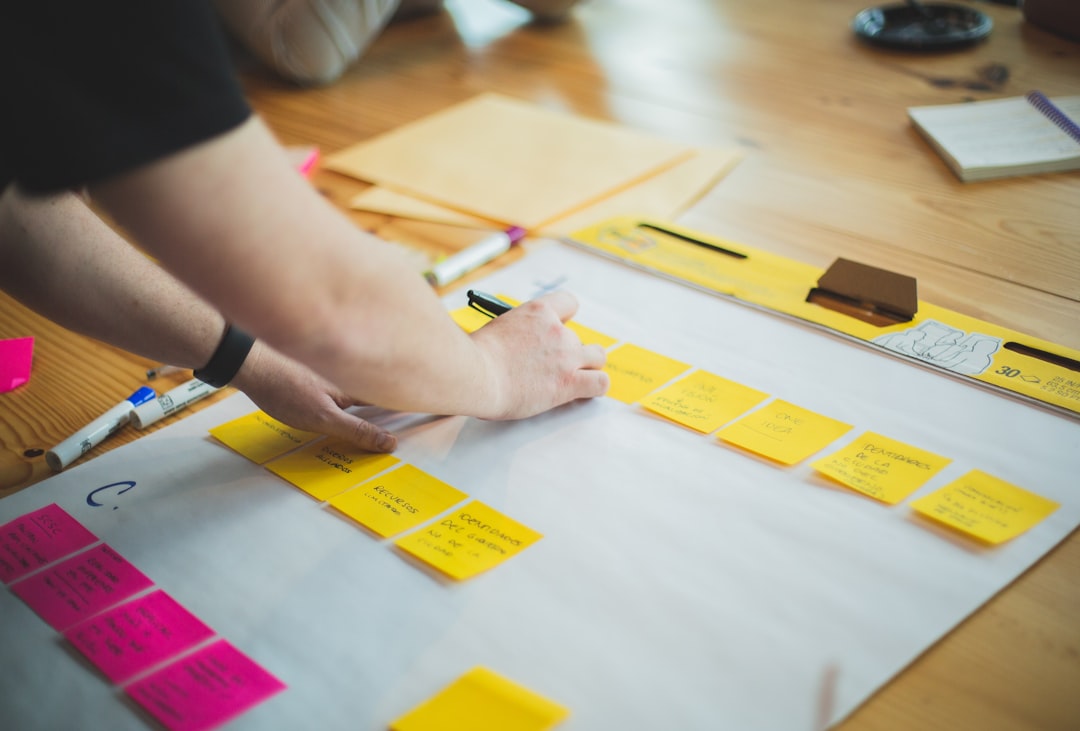
Why single-layer planning systems collapse
The moment you have interdependent work across teams, a Trello board or a shared to-do list stops being enough. You need visibility across multiple workflows at once. You need to see which tasks are blocking others. You need to understand how decisions in one area affect work in another.
Most product teams try to solve this by layering tools. Trello for tasks, Asana for projects, a spreadsheet for roadmaps, Slack for updates. What they've actually built is a communication burden. Nobody has a single source of truth. Task status lives in one place, priority lives in another, and context lives scattered across conversations.
This is where cost and control become inseparable. Per-seat pricing means teams resist adding people to the system. So critical information never makes it into the formal tool. Meetings become a substitute for clear planning. And nobody actually knows what's in progress.

Planning for how teams actually work
Effective task planning at scale requires that your planning system knows about dependencies, constraints, and capacity. Not just your personal to-do list, but how your work fits into broader team objectives and which other efforts it affects.
This means your planning tool needs to do more than store tasks. It needs to be flexible enough to model different types of work. A support team doesn't plan the same way a product team does. An agency managing multiple clients can't use the same workflow as an internal department. But most off-the-shelf solutions force you into a single model.
The teams that plan efficiently at scale do two things differently. First, they've eliminated the handoff between planning and execution. The same tool that shows the plan also tracks progress. There's no separate place where "the real work" happens. Second, they've built planning into their operational rhythm. Planning isn't a periodic event. It's continuous, because the system makes it cheap to update as context changes.
This requires a system that's built for growth but doesn't penalise you for it. Not one where every new person or new workflow creates friction or cost.
Rethinking what a task management system can do
When you start viewing task planning as the foundation of operational efficiency rather than just personal productivity, the requirements change. You're not looking for the fastest way to capture to-do items. You're looking for a system that can handle increasing complexity without requiring a redesign every six months.
This is why teams that operate at scale often move away from off-the-shelf SaaS tools entirely. Not because those tools are bad at the basics, but because they're constrained by their architecture and their cost model. You can't really customise them. You can't easily integrate them with your internal systems. And as your team grows, the per-seat pricing means the tool becomes an increasingly expensive luxury rather than infrastructure.
The alternative is a system that starts simple but can grow into something more sophisticated. Where you control the structure, not the platform. Where unlimited users means teams don't resist adding visibility. Where Chimedeck and similar approaches offer cost-efficient infrastructure that scales with your team rather than against it.
Building a task planning system that scales
If you're evaluating how to improve task planning across your organisation, consider these questions about what the system should actually enable.
Does it show dependencies? Can you see which tasks are blocking others? Can you identify critical path items quickly?
Can it adapt to different workflows? One team's kanban might be another team's timeline. Does the system accommodate this without forcing everything into a single model?
Is planning integrated with execution? Or are they separate systems? The gap between plan and reality creates information silos.
Does it handle context? Can you link tasks to broader goals, decisions, or business drivers? Or do tasks exist in isolation?
What's the cost structure? Per-seat pricing creates perverse incentives. Teams restrict access to keep costs down. Information stays outside the system. This defeats the purpose of having a system at all. A free Trello alternative with unlimited users can help teams scale without this friction.
Can you customize it? Your way of working is probably not identical to other teams in your industry. If you can't adapt the system without changing your process, you're buying inflexibility.
These questions matter because they separate tools designed for individual productivity from systems designed for team operations. A task list is a tool. A planning system is infrastructure.

How to plan tasks efficiently at your scale
The practical tactics remain useful. The 1-3-5 method for daily focus. Time blocking for execution. Eisenhower prioritisation for strategic alignment. But these work best inside a structure that doesn't fight you.
What changes as teams scale is the emphasis. Instead of focusing on how individuals plan their days, focus on ensuring the plan itself is visible and updatable by everyone who needs it. Instead of asking people to manage tasks in multiple places, build a single system that handles the full lifecycle from conception to completion.
Most teams discover too late that they chose a planning tool instead of building planning infrastructure. By that point, the costs of switching are real: migration effort, retraining, disruption to existing workflow. But waiting is expensive too, because every quarter you spend battling visibility and coordination is a quarter you're not optimising operations or shipping faster.
The shift toward open-source alternatives like Chimedeck reflects a growing recognition of this problem. Teams want a system that starts where they are, grows as they grow, and doesn't penalise them for success through scaling costs. They want to own their workflow, not rent it from a vendor with different priorities.
If how to plan tasks efficiently is your current challenge, the answer probably isn't a better planning method. It's a better planning system.
Frequently Asked Questions
What's the best way to prioritise when everything seems urgent?
Use the Eisenhower Matrix to separate urgency from importance, but also communicate why you've deprioritised things. Most of what feels urgent is actually important to someone else. Make the tradeoff explicit so stakeholders understand the constraint rather than seeing deprioritisation as an oversight.
How often should we plan tasks?
Weekly planning cycles work for most teams, with daily reviews to adjust for changes. The frequency matters less than the consistency. If planning is predictable, people build it into their rhythm. If it's sporadic, it becomes another disruptive meeting.
How do we handle tasks that don't fit a standard workflow?
The best systems let you customize the workflow rather than forcing all work into a single model. One team's urgent production support shouldn't determine how another team plans long-term projects. Flexibility to model different processes in the same system is more valuable than a beautifully designed process that doesn't match reality.
What's a realistic ratio of people to tasks?
It depends entirely on context, but a rough guide is that each person should have 3-5 active tasks at any time. More than that and context switching becomes the bottleneck. Fewer than that and you're over-planning or have blocked dependencies. The system should make it easy to see when someone is overloaded or idle.